Germack Pistachio: Detroit's Eastern Market Nut Roaster
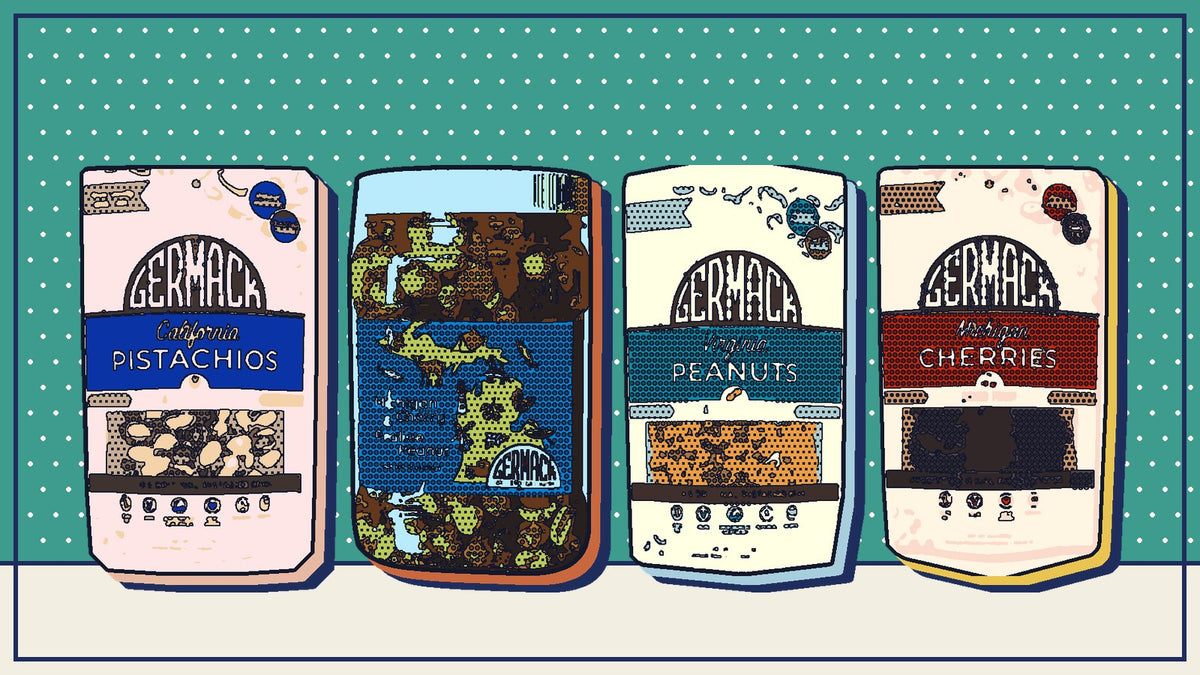
John and Frank Germack came through Ellis Island in 1912. John was 12. Frank was 7. The company they built has been roasting nuts in Detroit since 1924, most of that time in Eastern Market, and it describes itself as the first company in America to import and roast pistachios.
The Detroit Historical Society identifies the brothers as Armenian immigrants. According to the company's own history, John, the older brother, started an import business in Brooklyn and then Manhattan, selling olives, olive oil, spices and nuts to Turkish, Greek and Eastern European immigrants who wanted the food they'd left behind. Pistachios were a costly delicacy in the Mediterranean and were new to many Americans.
The brothers brought the business to Detroit, a factory town filling up with immigrants. Frank stayed. John bought another nut company, Zenobia, in 1936 and went back to New York. In Detroit, Frank narrowed the company down to importing and roasting pistachios, along with Brazil nuts, cashews and pine nuts.
Why the pistachios were red
Germack says the red pistachio was Frank Sr.'s idea. The company gives two reasons for the dye. It made the nuts eye-catching. It also hid the blotchy stains the outer husk leaves on the shell at harvest.
The company sold the red nuts in penny vending machines during the Depression, according to its history, and Frank Sr. branded them "Red Lip" pistachios. Germack processed natural, undyed pistachios too, but the red ones became the signature.
The business grew from regional to national in the 1950s and 1960s. By the 1960s, the company says, the Germacks were importing 20,000 tons of pistachios, which it puts at more than 40 percent of the crop of the three exporting countries. Frank Jr., back from service in Korea with a law degree from the University of Detroit, helped run it. He talked national retailers into carrying nuts in the company's 5-pound paper bags at a time when, according to Germack, the only other pistachio package on the shelf was a 12-ounce vacuum-packed tin. The factory became a stop for Eastern Market shoppers who wanted nuts still warm from the roaster, especially around the holidays.
A company that kept moving
Germack's history reads like a map of Detroit's postwar changes. The original plant sat on East Vernor Highway in the market, later renamed East Fisher Freeway when the expressway went through. It had two floors: roasting upstairs, packing and a retail counter below. Much of the roasting was done by sight and taste.
- 1976: Stroh Brewery bought the whole 1300 block of East Fisher to expand. Germack moved to St. Aubin and East Milwaukee.
- 1980: the city cleared that area, along with hundreds of other buildings, for an industrial park operated by General Motors' Cadillac division. Germack moved to Bellevue Street near the old Packard plant.
- 1985: a road project cut off access to Bellevue, and the company returned to East Fisher Freeway in Eastern Market, by its own account within 50 yards of the first factory.
- 2000: Germack added a separate factory for roasting, shipping and cold storage.
Today the retail shop is at 2509 Russell St., across from Shed 2, and the factory is at 2140 Wilkins St., both in the 48207 ZIP code. The company lists Frank Germack III and Suzanne Germack Fredrickson as co-owners and says the business is now in its fourth generation of family ownership.
What they roast now
Pistachios are still the headliner, but the line has spread well past them. Germack says it has added more than 100 products, among them dried fruits, snack mixes, chocolate-covered nuts and holiday items. It also roasts coffee in-house and runs a cafe in the Russell Street shop. One line on the company's history page tends to surprise people: Germack calls itself one of the nation's largest producers of squash (pumpkin) and sunflower seeds.
If you're shopping the counter, the pistachios are the reason to come. The cherry and praline nut mixes are the ones we pack in our Detroit boxes.
Visiting Eastern Market
Eastern Market is older than its sheds. According to the market's own history, an informal market started in 1882 after the Russell Street Cemetery was relocated, and the city formally designated Eastern Market in 1891. Shed 2, the one across from Germack, went up in 1898. Shed 3 opened in August 1922 as the market's first all-weather shed. The market's nonprofit operator calls it the nation's largest historic public market and says a summer Saturday now draws 30,000 to 40,000 people.
Here is when it's open, according to easternmarket.org:
- Saturday Market: 6 a.m. to 4 p.m., every week, all year. This is the main event.
- Holiday Market: November and December. The market lists Sunday Holiday Markets from 10 a.m. to 4 p.m. and a Tuesday Thanksgiving shopping market from 9 a.m. to 3 p.m. Check the market's site for this year's dates.
- Summer markets: a Sunday street market (10 a.m. to 4 p.m.) and a Tuesday market (9 a.m. to 3 p.m.) run June through September, so they're done for 2026.
- Flower Tuesday Markets: every Tuesday in May, 9 a.m. to 3 p.m.
- Wholesale market: midnight to 6 a.m., Monday through Friday, April through November. The public can shop it, but for bulk purchases only.
The shops around the sheds, Germack included, keep their own hours. The Germack shop opens at 8 a.m. Monday through Saturday, according to its website. Call (313) 566-0062 before a weekday trip to confirm closing time.
A few things worth knowing before you go:
- Parking is free across most of the district, the market says, but street parking tickets run $45. Read the signs.
- Get there early on Saturday. The market opens at 6 a.m., and a summer Saturday draws tens of thousands of people.
- Bridge Cards and SNAP are accepted by many vendors. The market's Double Up Food Bucks program doubles EBT dollars spent on Michigan-grown food. Ask at the Welcome Center on the south side of Shed 3 or the information booth inside Shed 5.
- Dogs aren't allowed in the sheds or near vendor stalls, with an exception for service animals. They are welcome in much of the surrounding district.
- Meat and cheese: Gratiot Central Market, a meat hall first built in 1915, is open six days a week and closed Sundays.
- Tours are run by outside groups, not the market itself. The market's site lists food, mural, history and bike tours.
If you can't get to Russell Street, Germack's pistachios and its cherry and praline nuts go into The Woodward ($189), and the Germack dried Michigan cherries and peanuts are in The Michigan Box ($79).